![UltraSyntec [logo]](https://ultrasyntecltd.co.uk/wp-content/uploads/ultrasyntec-logo.png)

Industrial business applications can involve anything from manufacturing to cleaning and repair work. It’s a multifaceted industry, and there’s always something new to see. What stays the same, however, is a need for durable, safe flooring that can stand a lot of wear and tear over a long period of time.
Resin flooring is a tough solution, applicable to a huge variety of business environments. Durable and non-reactive, this is what gives businesses longlasting workplace functionality.
Still not sure? Join us today, as we discuss three types of resin floors, their benefits, and why resin is the way forward for your business flooring.
The Three Types of Resin Flooring
PMMA
Polymethyl methacrylate, otherwise known as PMMA, is a synthetic resin used in epoxy flooring. Known in the industry as “acrylic” or “acrylic glass”, it’s used to create a lot of common products like Plexiglas, Lucite or Perspex.
PMMA resin flooring is distinguishable by fast application and hardening times. This works at temperatures as low as 0°C. It’s this rapid curing that makes it possible for floors to be installed and to cure over the space of a weekend. This makes it useful for minimising downtime during factory installations.
This is a customisable thermoplastic resin that works for precise industrial work. Turn to PMMA when you need slip or chemical resistance or insulation from electricity. It’s easy to repair, and upgrading is simple due to the interlayered structure of its chemical bond. Standard resin flooring, by comparison, requires complete replacement to effect a real repair.
There is a price issue to consider. PMMA resin floors usually cost more than other standard resin flooring options. There’s a reason for that.
PMMA resin floors are last for much longer periods of time than standard flooring. What’s known as the time interval to first maintenance is longer than with any other system, hands down. In any business, this is an important consideration to make.
Polyurethane
Polyurethane or PU resin floor types offer improved impact resistance, in much the same way as PMMA. Abrasion and chemical resistant, they are tough and long lasting, which make them a good investment. It’s also an attractive option, available in various finishes to achieve different decorative options.
High temperatures and direct heat present no problems, as this material is impact and temperature resistant. It’s an ideal option for any environment where heat is a factor, such as restaurants and factories.
One factor to consider when installing PU resin floors is that they take longer to set than PMMA installations. This is due to their classification as a thermoset resin and will translate into more downtime for installations and in the case of any necessary repairs.
Epoxy
This might be the best-known option when it comes to industrial resin flooring. Epoxy resin is another thermoset material, offering resin flooring performance and durability. What’s most important for some applications is that it offers optimum electrical conductivity.
Epoxies are available in several finishes, offering a range of advantages according to your needs. The one constant, however, is that all epoxy resin flooring is impervious, as well as bonding well to concrete. This helps to protect the underlying concrete from impact and wear, as well as abrasion, water ingress and attack from oils and chemicals.
The biggest downside to an epoxy resin floor, however, is the repair process. When these installations are damaged, they have to be completely replaced. And, given that installation comes with the longest cure time of any resin flooring, replacements can be expensive.
Resistance
One of the biggest benefits of epoxy flooring is that it is resistant to everything from fuel oils to bleach. Oil, transmission fluid and other contaminants run up against epoxy and it stops them dead in their tracks. This is what makes them such a popular option in garages and other automotive applications.
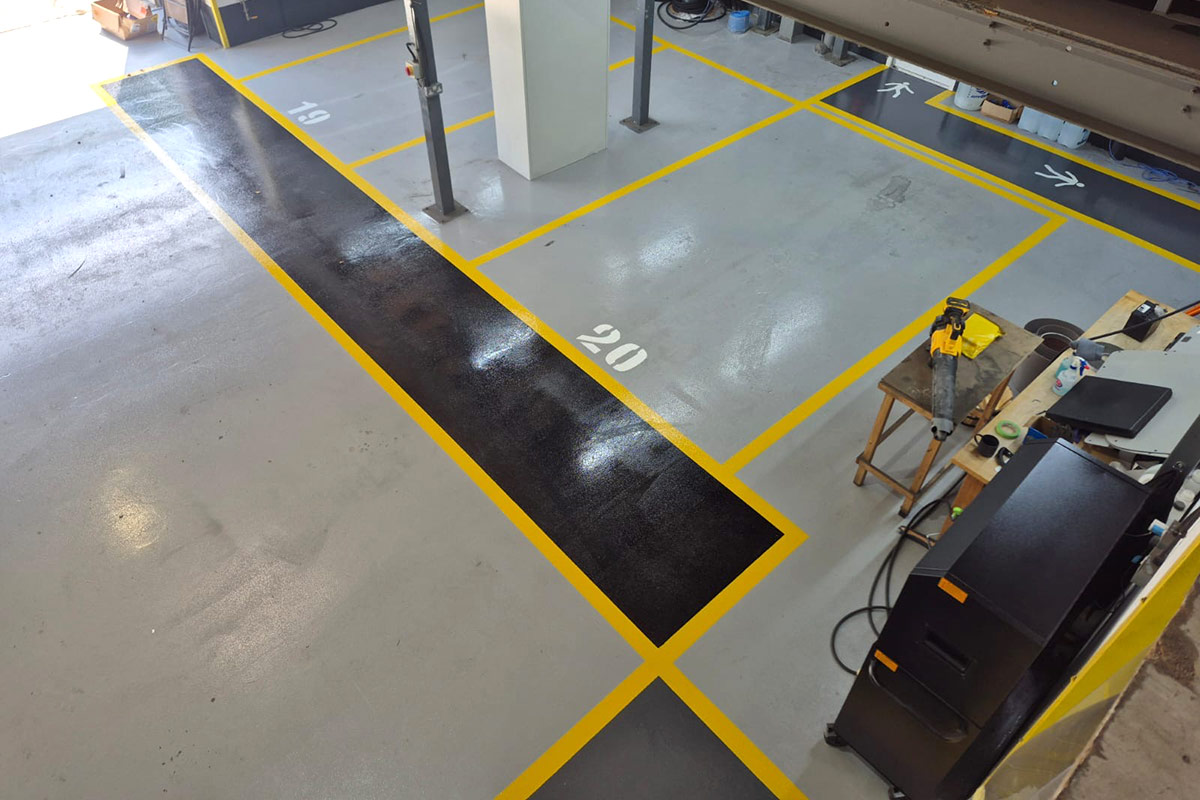
Resin-based flooring is seamless and offers excellent chemical resistance, for better hygiene levels. Food factory and beverage industries benefit from its protection against bacterial growth, as well.
Variety
For a flooring option with so much versatility in the industrial sector, epoxy flooring can also make for an attractive option in other settings. It’s available in a wide range of colours, and its gleaming, smooth finish adds an element of elegance to your surroundings. Arrange floor elements into patterns for attractive designs.
Combining it with various paints or colourings will also help to disguise chips or cracks in your existing flooring. This makes epoxy flooring an extremely versatile option.
Affordability
Epoxy is also great for your budget, compared to other flooring options. You can install it over an existing concrete base, for example, meaning you save money on removing old flooring.
The installation also costs less overall than most alternatives. The price point is, by and large, one of the biggest selling points for most people considering an epoxy option.
Durability and Protection
Epoxy coating lasts longer than other types of flooring as well. Moisture can’t penetrate its seamless finish, so nothing gets underneath it to lift it or make it pop up. There’s no stripping or waxing required in order to maintain it. All you’ll need is a simple scrubbing.
Epoxy flooring offers durable protection to withstand water, chemical abrasion and wear and tear. In terms of protection, epoxy buffers your underlying flooring against a wide array of damaging effects. Cracks, heat, stains, grease and moisture can’t get to it, safeguarding your investment for longer.
And it’s not about “doing the right thing” with your investment. Epoxy coating cuts the costs of floor maintenance, protecting against damage and other issues. Carpet cleaning, grouting, and maintenance aren’t factors when you have an epoxy installation.
Resin Flooring: Here for the Long Haul
Resin-based industrial flooring provides various useful features. Resin flooring is hygienic, durable, and easy to clean. They’re also great in terms of downtime, cutting installation times. Finally, they provide exceptional resistance to abrasions and chemicals.
For more on the benefits of epoxy and resin-based flooring installations, check out some of our other great blog content, or get in touch with us today!