![UltraSyntec [logo]](https://ultrasyntecltd.co.uk/wp-content/uploads/ultrasyntec-logo.png)

Industrial floors fall into a handful of families: resin coatings, resin screeds, polyurethane systems, polished or sealed concrete, and sheet materials such as vinyl. Each behaves differently under load, temperature, chemicals and cleaning regimes, and the wrong choice usually shows up within a year or two rather than at handover.
UltraSyntec has specified and installed industrial flooring since 1996, across food production, manufacturing, warehousing, automotive and healthcare buildings. This guide covers what each type is genuinely good at and where it struggles, written from what we see going wrong on site. When a resin system is the answer, our resin flooring systems page outlines what we install.
It’s a choice further complicated by the wide range of industrial flooring options available on the market today. From robust resin floors to fast and versatile vinyl options, each has its own benefits and characteristics and can significantly impact operational efficiency.
Taking time to assess your requirements and the unique operational issues facing your industry and application is critical when choosing the right types of industrial flooring. Consulting with professional installers will give you valuable insights into the performance of the many different options available for manufacturing facilities, commercial spaces and industrial settings.
Choices include epoxy, rubber, concrete, polished concrete, vinyl, and polyurethane flooring.
In this guide, we aim to examine the different industrial flooring systems, identify the pros and cons of each, and determine which would be right for you. It’s also important to note that industrial flooring can be tailored to specific operational and applicational requirements to ensure a long-term, safe and aesthetically pleasing solution.
What is Industrial Flooring?
So, what is industrial flooring and commercial flooring, and how does it differ from other flooring solutions used elsewhere in residential and commercial settings? We are talking here about specialised, heavy-duty materials, developed specifically to perform in harsh industrial conditions.
Operating in environments where the surface will be subject to potential damage from heavy machinery, wheeled traffic, heavy-duty foot traffic and even aggressive chemical spills and substance spillages, industrial flooring needs to be able to withstand extremes in terms of heat, mechanical damage and even acid and solvent attack.
Choosing the right flooring with structural integrity is a vital consideration.
In addition, workplace safety is an important consideration. There are safety standards to consider, covering in particular slip resistance in industrial settings, but also fire safety and load capabilities.
Choosing the correct heavy-duty industrial flooring options can prevent costly accidents and injuries within the workplace, alongside optimising operational efficiency and reducing maintenance costs over time.
What makes a floor heavy-duty?
Heavy-duty flooring makes an important contribution to both safety, productivity and costs. What are the individual components and considerations that make a floor heavy-duty and appropriate for industrial and commercial applications?
It needs to be durable to cope with the everyday wear and tear of the industrial environment, to withstand the rigours of high traffic areas, including heavy foot traffic, wheeled traffic and other machinery.
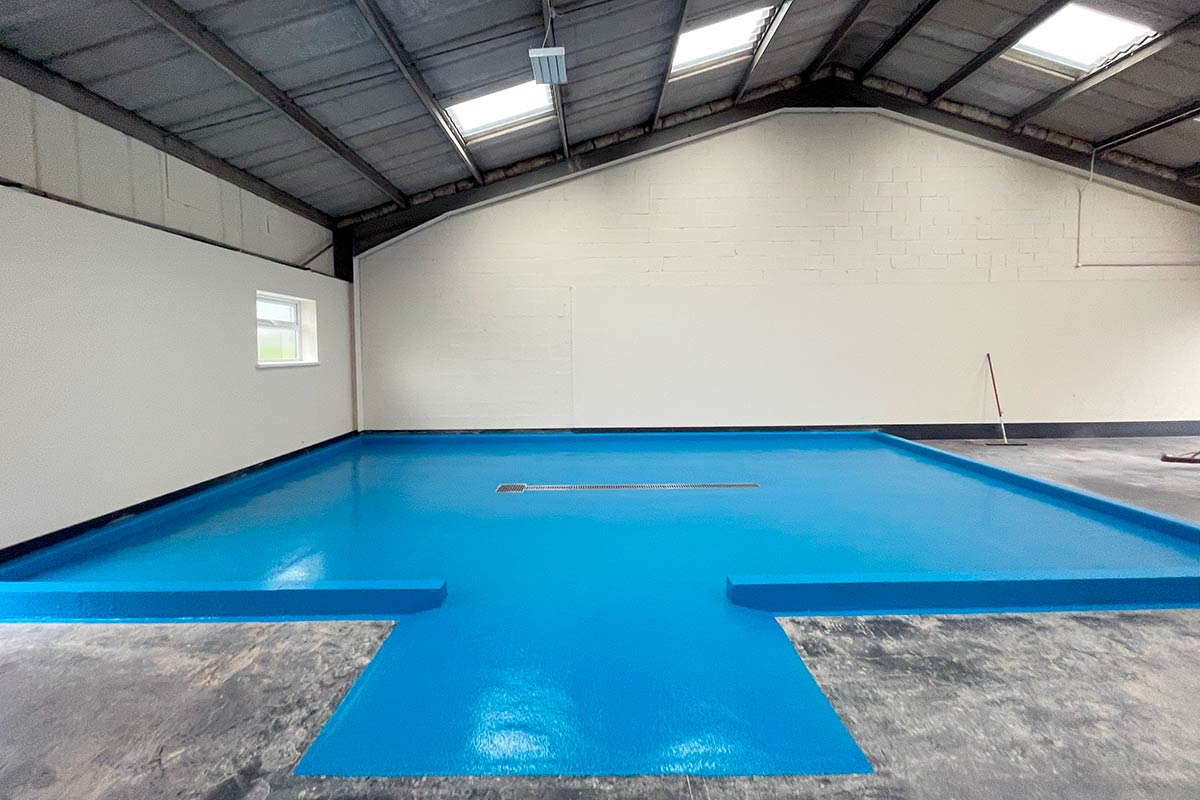
Floors in industrial settings are subject to some of the most aggressive chemicals, including solvents and acids. Heavy-duty flooring must be able to resist material spillages, with the surface capable of withstanding any associated damage, as well as often aggressive cleaning methods.
Damage to the flooring through impact, such as heavy machinery or moving and dropping equipment, is a common problem. Industrial flooring should be chosen to reduce the potential for damage in such situations.
Slip resistance is absolutely vital too. Selecting the right flooring options will minimise the potential for injuries, creating safer working spaces by reducing the risks of slips and falls. Slip resistance can be further enhanced using specific treatments or textured surfaces for added traction.
Ease of maintenance is another aspect which should be considered when specifying industrial flooring options. Heavy-duty flooring should be easy to clean and maintain without risking damaging the surface, particularly where steam cleaning processes are used.
So, a floor is heavy-duty if it can meet all the challenges presented by specific operational and working processes in differing environments. Types of heavy-duty industrial flooring include epoxy flooring, rubber flooring, polished concrete flooring, vinyl flooring and polyurethane flooring.
UltraSyntec have vast experience in installing heavy-duty flooring in food and beverage, manufacturing and logistics environments. This is demonstrated in recent project case studies for Woodhead Bros, Greencroft Bottling Company and a Preston-based Skoda dealership.
Why are industrial flooring options so important?
There are a number of important considerations here, including productivity and operational efficiencies, safety and the ability to withstand the individual challenges involved in different manufacturing processes and industrial settings. Choosing the right industrial flooring can impact the overall profitability of your business.
What are the benefits of industrial flooring?
Industrial flooring brings a range of benefits to your business, including:-
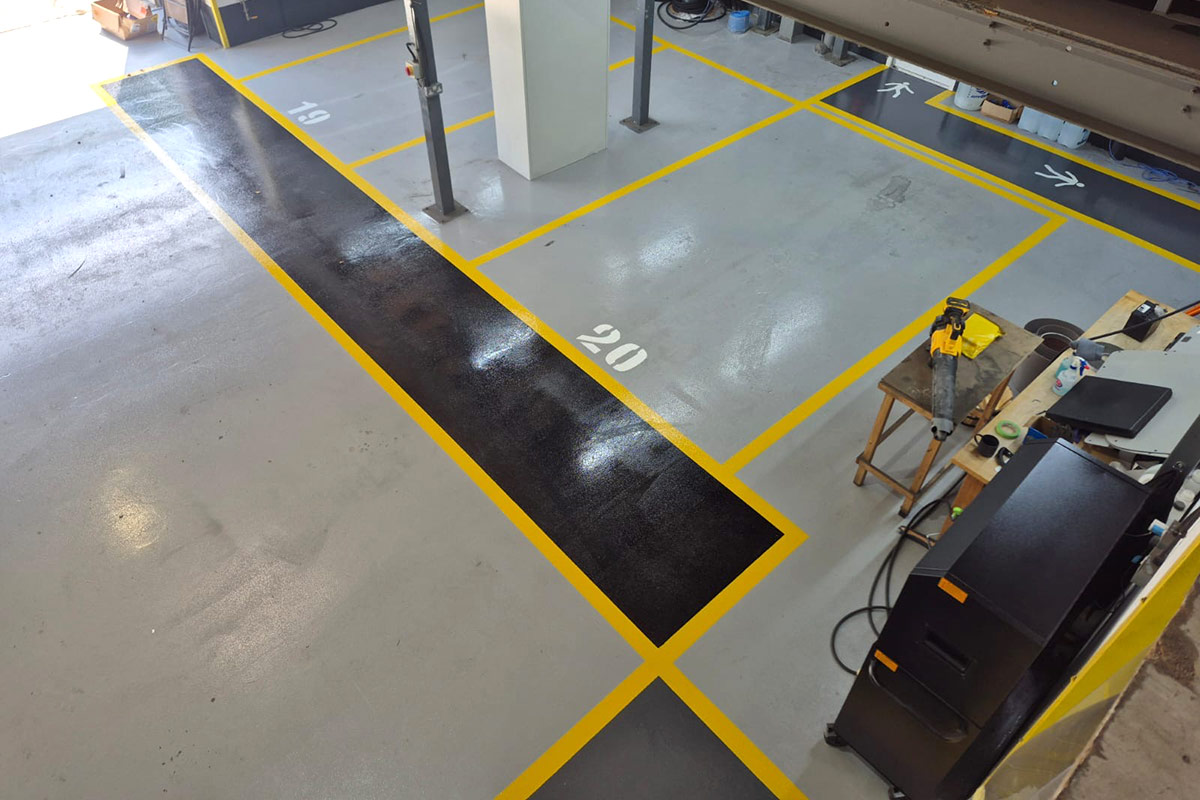
- Improved safety for personnel – enhanced levels of slip resistance reduce the potential for workplace accidents. In many applications, colours and symbols can be added or even be integral to the flooring to denote safe areas and potential hazards. Added textures can even be incorporated to further improve slip resistance.
- Floor longevity – installing a heavy-duty floor which is designed to last and to withstand the rigours of your operating processes can save a significant amount of money in terms of maintenance and repair costs.
- Reduced maintenance – industrial flooring is designed and formulated to make cleaning and maintenance fast and easy. In addition, chemical resistance and impact resistance mean damage is less likely to occur, reducing the need for costly repairs.
- Options to match every environment – industrial flooring is available to suit different processes, applications and requirements.
They look great and stay looking good over time – there is a wide range of choice in terms of materials, colours, patterns and finishes. Creating the right environment will enhance safety and can even enhance workplace morale and productivity.
Types of industrial flooring
As we have mentioned earlier, the choice of flooring options is broad, and it is always worth consulting with professional installers to match your requirements to the right industrial flooring options.
Industrial Concrete Flooring
Used across industry, industrial concrete flooring remains a popular choice, resistant to damage, easy to clean and extremely durable. Enhanced with resin coating solutions such as an epoxy floor coating, these floors provide increased durability and slip resistance.
Pros
- Resistant to harsh operating conditions
- Can withstand heavy foot traffic and wheeled traffic
- Capable of withstanding heavy loads in applications using plant and machinery
- Relatively easy to clean with reduced maintenance requirements
Cons
- Can prove less than comfortable underfoot where personnel stand for long periods
- Reduced sound and heat insulation properties
Resin flooring systems
Industrial resin flooring is our speciality at UltraSyntec, and we have been successfully installing polyurethane and epoxy flooring for decades.
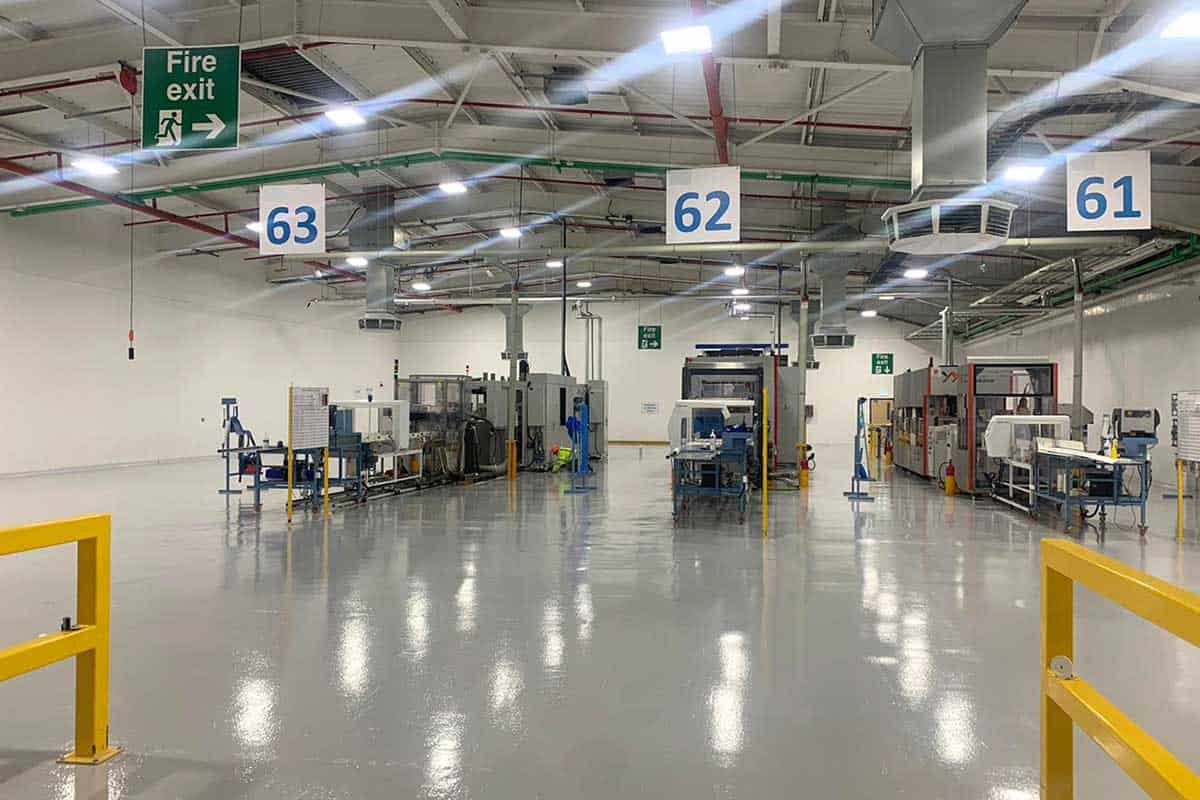
It is widely used across industry for its durability, practicality, resistance to damage, ability to enhance safety and excellent aesthetics. Providing a seamless solution which can also be combined with aggregates to enhance slip resistance, resin floors must be specified and installed by a qualified professional to optimise the end results.
Polyurethane
Practical polyurethane or PU resin flooring is tough, resilient, heavy-duty duty and attractive. Its impact resistance and thermal durability make it suitable for harsh industrial environments.
Pros
- Easy to maintain, with excellent slip resistance
- Great resistance to impact damage and chemical-resistant properties
- Good insulation properties and thermal resistance
- Aesthetically pleasing with a wide range of colours and finishes
Cons
- Versatile but not ideal for all industrial environments
- Softer and more elastic than other options for commercial environments
Epoxy
Epoxy flooring is known for its durability and versatility in commercial properties and industrial settings, combining strength and resistance to impact damage and spillages.
Pros
- Epoxy flooring is exceptionally long-lasting
- Excellent adhesion to almost any substrate, creating a seamless surface
- Advanced levels of durability and chemical resistance
- Epoxy resins are capable of withstanding heavy traffic in high-traffic areas
- Excellent aesthetics and minimal maintenance
Cons
- Lengthy time to cure
- Strong odour during installation
Polished concrete flooring
Polished concrete provides a durable solution for industrial spaces with a sleek, modern shine achieved by mechanical grinding of the surface. It can withstand heavy industrial equipment and high foot traffic in industrial workplaces.
Pros
- Polished concrete flooring is strong and durable, resistant to heavy foot traffic and wheeled traffic
- Attractive, modern finish with multiple design options for commercial spaces
- Easy to clean, low maintenance
Cons
- Polished concrete can be unforgiving and uncomfortable underfoot
- Low insulation properties
Vinyl flooring
Easy to maintain, industrial vinyl flooring provides a practical choice for industrial and commercial settings due to its resilience and affordability, offering a cost-effective solution.
Pros
- Vinyl flooring is resilient and hard-wearing, and low-maintenance
- Affordable option with multiple design choices
- Slip resistant
- Cushioned for acoustic, insulation and comfort properties
Cons
- Shorter lifespan than other options
- Cannot be repaired
- It can be difficult to remove where adhesive is used
Rubber flooring
Rubber flooring, rubber mats and rubber tiles provide a range of safety features alongside resistance to wear and tear, providing a versatile industrial flooring option.
Pros
- Elasticity and flexibility provide comfort underfoot
- Rubber flooring is resistant to water and many chemicals, as well as high foot traffic
- Available in a wide range of colours and textures
- Low maintenance and fire resistant
- Safe and hygienic
Cons
- Installation of rubber flooring can be complex
- Visibility of seams
- Susceptible to some chemicals
Wrapping things up
In response to the question about which is the best industrial flooring type for industrial and commercial spaces, this depends completely on your processes, environment and requirements.
Epoxy flooring may be the right choice for one application, whilst polished concrete or concrete flooring could provide the perfect match for another. Identifying your key factors, such as safety features, ease of maintenance, and price, will help you make the right choice of flooring options in a market where the options are numerous and often complex.
Contact UltraSyntec to discuss the right flooring to match your requirements with experienced resin flooring contractors.